Réunion Island guide › The west coast and the lagoon
Does Réunion Island have good beaches?
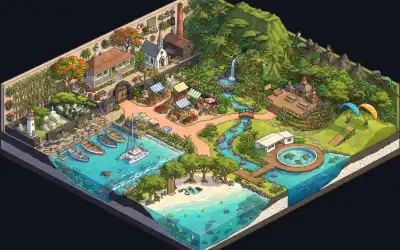
Yes, but almost all of them are on the west coast, inside the lagoon, between Boucan Canot and Trou d'Eau: white or golden sand, calm water, a reef a few hundred metres offshore. Elsewhere on the island the sea is open, the waves are heavy and swimming is often restricted or banned. This is a hiking island that happens to have a very good lagoon, not a beach island.
It all comes down to a coral reef running along the coast and holding in a shallow lagoon, protected as a marine nature reserve since 2007 (3,500 hectares, or about 8,600 acres, from Cap La Houssaye in Saint-Paul to the Roche aux Oiseaux in Étang-Salé). The black-sand beaches of the south come from basalt: you look at them more than you swim from them.
Six beaches worth knowing, north to south:
- Boucan Canot: fine, pale sand, a swimming area marked off by a net, a natural pool cut into the volcanic rocks and a pedestrian esplanade of restaurants; beyond the net, waves, currents and a bottom that drops away quickly.
- Roches Noires: right in the middle of Saint-Gilles, outside the lagoon, with a netted swimming zone; handy for a dip after the Wednesday market, but short of shade in the afternoon.
- The Ermitage: the classic, with white sand, a shallow lagoon and filao trees (casuarinas, with needle-like foliage) for picnics; it is also the best place on the island for a mask and snorkel (see Where can you snorkel in Réunion's Ermitage lagoon?).
- La Saline-les-Bains: fine golden sand, clear shallow water, an accessible beach with adapted toilets and access matting, and a water-sports base for paddleboards and clear-bottomed kayaks.
- Trou d'Eau: a lagoon about 450 m (500 yards) wide, the quietest of the Saint-Gilles area, with a car park right behind the beach; swimming is considered safe, but there are no lifeguards.
- Étang-Salé: about 1.5 km (1 mile) of black sand, volcanic sand, basalt with glints of olivine, with a netted area and the Bassin Pirogue for swimming.
How it works: a lagoon beach is used between the shore and the reef, never beyond it. Flags, lifeguard posts and the orders that set the permitted zones are covered in Is it safe to swim in Réunion Island with the sharks?. In the south, Grande Anse (clear sand, often rough sea) and the lagoon beach at Saint-Pierre round out the list: see Can you swim at Grande Anse in Réunion?.
The trap comes in three words: weekend, sun, sand. The Ermitage car park is often full on Saturdays and Sundays; the black sand at Étang-Salé can get hot enough to burn your feet, so bring beach shoes; and the UV index is very high. During cyclone season, swell and prefectoral orders can close the water (see Is cyclone season a bad time to visit Réunion Island?).
Verdict: for a first swim, the Ermitage or La Saline, especially with children; Boucan Canot for atmosphere and terraces; Étang-Salé for black sand, which makes a change from postcards. If beaches are the point of your trip, Mauritius does it better: see Réunion or Mauritius: which island should you choose?.
Tip: at weekends the west coast jams (roads, car parks, towels), so pick Trou d'Eau or La Saline, both quieter than the Ermitage, and arrive before lunch: that is the difference between parking by the beach and a 20-minute walk in the sun.
Information checked in November 2026 (lifeguard cover, nets and orders can change), to be confirmed before you go.
More landmarks in this section
- Where can you snorkel in Réunion's Ermitage lagoon?
- What is there to do in Saint-Gilles-les-Bains?
- When and how can you see whales in Réunion?
- Where can you see dolphins and turtles in Réunion?
- Maïdo viewpoint in Réunion: when should you go?
- What is there to do in Saint-Leu, Réunion?
- Is Saint-Paul market in Réunion worth a visit?
- Is it safe to swim in Réunion Island with the sharks?